
Teaching kids the difference between good habits and bad habits is easier when it's hands-on. This post has 5 free, printable good and bad habits worksheets for kids — perfect for preschool and kindergarten — plus a habit tracker chart. Every worksheet is black and white and ready to print, color, cut, or tick. You can download the complete set as a free PDF at the end of this post.
What Are Good Habits and Bad Habits for Kids?
Good habits are the small, everyday actions that help kids grow up healthy, kind, and independent — things like brushing their teeth, saying please and thank you, sharing their toys, and going to bed on time.
Bad habits are the everyday actions that work against that — like fighting with siblings or friends, not sharing, spending too much time in front of a screen, littering, or forgetting to wash hands before eating.
At the preschool and kindergarten stage, kids aren't yet reasoning about "healthy lifestyles" in the abstract — they're learning by recognizing specific actions and sorting them into "this is okay" and "this is not okay." That's exactly what these worksheets are designed to do.
Why Teach Good and Bad Habits Early?
- Kids as young as 3–4 can already start recognizing patterns of behavior, and early habit-awareness sticks longer than habits introduced later.
- Sorting and matching activities (like the worksheets below) build categorization skills alongside the habit lesson itself.
- A visual habit tracker gives kids an early, low-pressure introduction to goal-setting and self-reflection.
- Worksheets turn an abstract lesson ("be good") into something kids can see, color, and check off — which holds attention far better than a verbal reminder.
Free Good and Bad Habits Worksheets for Kids (Printable PDF)
Below are all 5 worksheets included in the free downloadable pack, plus a habit tracker chart. Each one targets a slightly different skill level, so you can pick the right one for your child or classroom — or use all five together for a full lesson.
1. Good Habits Tracker Chart (Printable PDF)
This weekly habit tracker chart helps kids set simple goals and track them daily. Your child writes down the habits they want to build, then ticks a box each day they complete it. Below the tracker are two reflection sections — "How did the week go?" and "Plans for the next week" — which gently introduce the idea of reviewing progress and setting new goals, rather than just checking boxes.

Best for: kids who can already write a few words, or with a parent/teacher filling it in together.
2. Is It a Good Habit? Coloring Worksheet
A black and white, print-ready coloring worksheet showing everyday actions — brushing teeth, running, fighting, and more. Under each picture are two blocks: kids color the Yes block if it's a good habit, or the No block if it isn't. This is the most hands-on worksheet in the set and works well even for kids who can't read or write yet.

Best for: ages 3–4, or any child who learns best through coloring.
3. Good Habits vs Bad Habits Matching Worksheet
Two large circles — one labeled Good Habits, one labeled Bad Habits. Around them are small images with short descriptions (like "watching too much TV"). Kids draw a line from each picture to the circle it belongs in. This worksheet is great for reinforcing categorization and works well as a group or classroom activity.

Best for: ages 4–5, kindergarten classrooms.
4. Tick the Good Habits and Cross the Bad Habits Worksheet
A simple list of habit statements — like "I go to bed early" or "I don't share my toys" — with a box next to each one. Kids tick the box next to good habits and put a cross next to bad habits. Because it's text-based, this worksheet is best for kids who are already reading simple sentences.

Best for: kindergarten and early readers.
5. Cut and Paste Good Habits and Bad Habits Worksheet
Two columns — Good Habits and Bad Habits — with a set of habit labels below. Kids cut out each label and paste it into the correct column. This one doubles as scissor-skills and fine motor practice alongside the habit lesson.
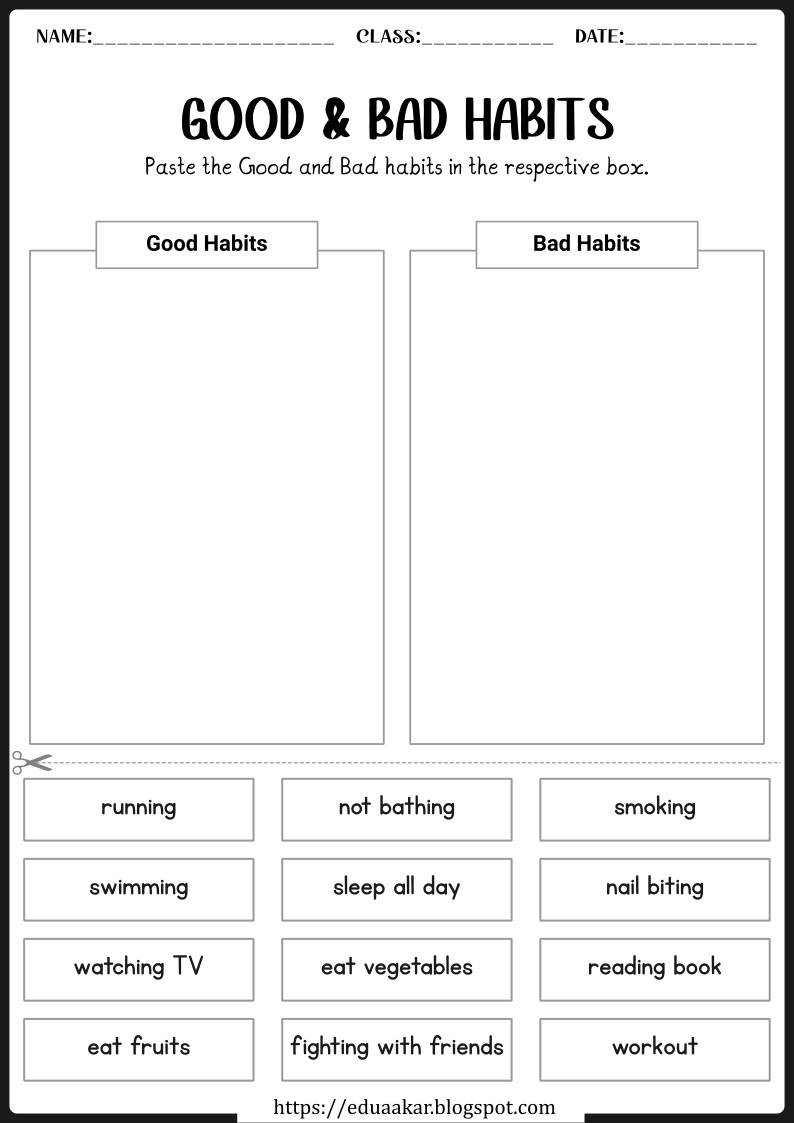
Best for: ages 4–6, or as a fun follow-up after the other worksheets.
How to Use These Worksheets at Home or in the Classroom
- Start young kids (age 3) with the coloring worksheet — no reading required.
- Move to the matching and cut-and-paste worksheets once your child can recognize pictures confidently.
- Use the tick and cross worksheet once your child is reading short sentences on their own.
- Introduce the habit tracker chart as an ongoing weekly activity, separate from the one-time worksheets — it works best stuck on a fridge or wall.
- Talk through each answer out loud with your child rather than just marking right or wrong — the conversation is where the actual learning happens.
Download the Free PDF
All 5 worksheets and the habit tracker chart are available together as one free, printable, black and white PDF — no sign-up required.

More Free Worksheets for Kids
Good habits don't stop at this worksheet set — good bathroom etiquette is one of the habits kids often need the most reminding about. Check out our free Good Bathroom Rules Posters for Kids, designed to reinforce hygiene habits like handwashing and flushing with colorful printable reminders for the classroom or bathroom wall.
Frequently Asked Questions
What are some examples of good habits for kids? Common good habits for kids include brushing their teeth twice a day, saying please and thank you, sharing toys, washing hands before eating, and going to bed on time.
What are some examples of bad habits in children? Common bad habits include fighting with siblings or friends, not sharing, excessive screen time, littering, and skipping handwashing.
How do I teach my child the difference between good and bad habits? The easiest way is through repetition and visual activities — worksheets that ask kids to sort, match, or color actions as "good" or "bad" help the lesson stick far better than verbal reminders alone.
What age should kids start learning about good and bad habits? Most kids can start recognizing good and bad habits from around age 3, and worksheets like the ones above are designed specifically for the preschool-to-kindergarten range (ages 3–6).
Is this good and bad habits worksheet pdf free to download? Yes — all 5 worksheets and the habit tracker chart are free to download as a single PDF, with no sign-up required.
Final Thoughts
These 5 free good and bad habits worksheets — a habit tracker chart, coloring worksheet, matching worksheet, tick-and-cross worksheet, and cut-and-paste worksheet — give you everything you need to teach this lesson at home or in the kindergarten classroom, at whatever level your child is at. Download the free PDF above and get started today.